Automating B2B quotes with AI and n8n: from 3 days to 10 minutes (SMB guide)
In almost every B2B SMB I work with, the quote is the commercial bottleneck
Not for lack of skill, but because the process passes through too many hands: a request arrives by email, someone reads it, asks for clarification, looks up item codes in the ERP, checks which discount applies to that customer, fills in a file, gets it approved and finally sends it. Two or three working days have gone by. The competitor who answers within an hour isn't better — they simply removed the waiting from the process.
That's why quote automation is one of the AI projects with the fastest and most measurable return: response time is a number the company already knows, and the conversion gap between an offer sent in one hour and one sent in three days is documented across every repeat-supply industry. Let's look at how such a flow is actually built, what it takes, and what it costs.
The entry point is the sales inbox — email, website form or WhatsApp Business
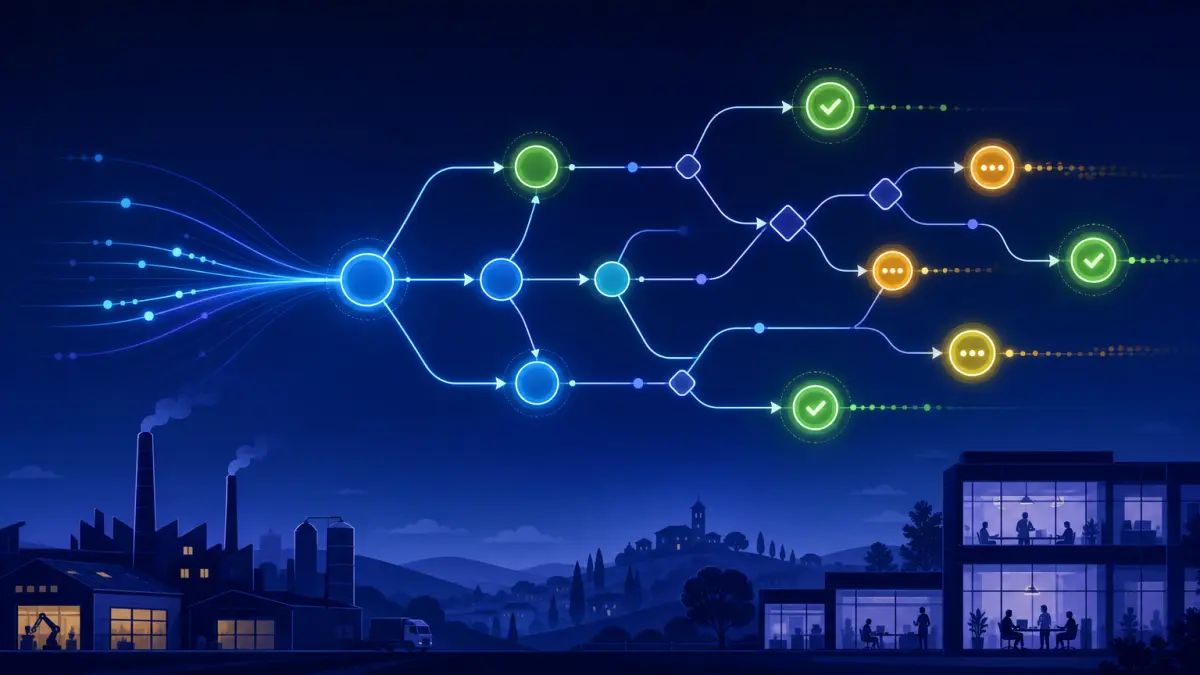
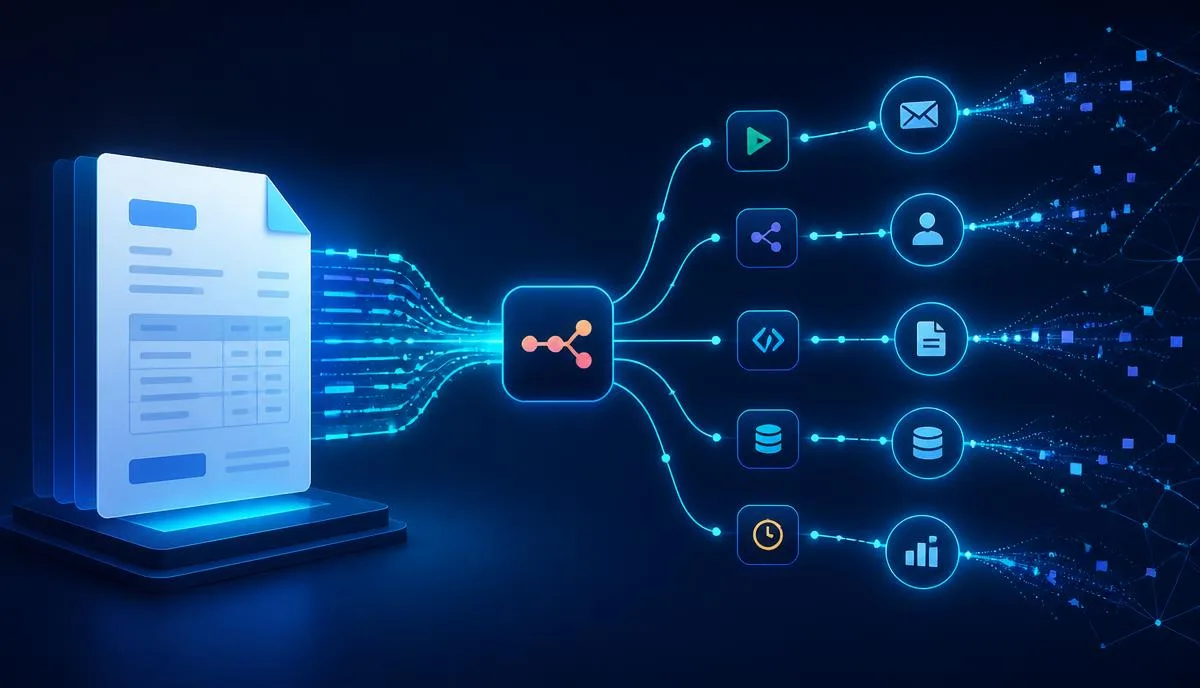
The flow, orchestrated in n8n, picks up the message and hands it to a language model with a precise job: extract, in structured form, what the customer is asking for. Quantities, item codes or descriptions, required lead times, delivery location, attachments (a technical drawing, a specification, an old PDF order). The difference between a toy and a useful tool lies entirely in how uncertainty is handled: if the model isn't confident about an item, the flow must not invent — it must flag the line for review.
The second step is retrieving real data
The agent queries the ERP or company database — via API, SQL connector or synced export — to get list prices, availability, contract terms and that customer's history: what discount they got last time, on which payment terms, on which codes. This is the part no generic chatbot can do for you, and it's also what makes the quote credible: the numbers come out of your systems, not the model's imagination.
The third step is composition
The flow generates the document in your format — a PDF with your layout, or an offer created directly in the ERP — and calculates totals, tiered discounts, shipping and validity. From here there are two routes. In the human-in-the-loop version, the quote reaches the salesperson on Slack, Teams or email with an approve button: thirty seconds to check, then send. In the fully automatic version, offers below a certain amount and using catalogue items go out on their own, while everything else still passes through a person. In practice, for the first few months I always recommend the first option: it builds trust in the numbers and surfaces the real edge cases.
The last piece, the one usually forgotten, is follow-up
The same flow logs the offer and, if no reply arrives after a set number of days, sends a polite reminder, updates the CRM status and alerts the salesperson when the customer opens the PDF or replies. A significant share of the revenue these projects recover doesn't come from faster issuing, but from quotes that used to die in silence.
On time and cost, concretely: a flow like this, on a defined catalogue and with an ERP that exposes its data, typically takes two to four weeks including analysis, integration, testing on real cases and go-live, with an upfront investment that in most cases falls between 4,000 and 12,000 euros depending on price-list and integration complexity, plus recurring model and infrastructure costs that at SMB volumes stay in the range of a few tens of euros a month. For the full cost breakdown, see the article on what an AI agent costs a company.
Calculating the return is simpler than it sounds and needs no heroic assumptions
Take the number of quotes you issue in a month, multiply it by the average time a person spends on each and value that at your internal hourly cost: that's the direct saving. Then look at your win rate and ask how many offers you lose to delay: even a two-percentage-point improvement on a meaningful average order value pays the project back in a few months. In the cases I've delivered, typical payback is three to six months, and the biggest variable isn't the technology — it's how orderly the price list is.
An honest caveat: this kind of automation works beautifully when prices follow rules, however complex, as long as they're explicit. If every quote is a bespoke project priced by the owner's feel, AI can still prepare the draft, gather the data and write the text, but the pricing decision stays human — and that's fine. In that case the value shifts to structured intake and follow-up, which remain 100% automatable.
If quotes in your company still run on copy-paste, shared files and reminders from memory, the first step isn't buying a tool: it's mapping how many you issue, how much time they cost and where they stall. That map tells you on its own which automation is worth building first — and it's often smaller and faster than you'd expect.
Frequently asked questions
Is the quote sent without human review?
No. In the recommended setup the flow prepares the document and queues it for approval. Fully automatic sending is enabled only on rule-based price lists, after weeks of verification.
Does it work if prices are negotiated case by case?
It works well when prices follow rules, even complex ones. If every quote is its own negotiation, automation covers data collection and drafting, not the pricing decision.
How long does it take to launch?
Usually 3–6 weeks: one for analysing the price list and rules, two or three for the flow and integration, one or two testing with real requests.
Davide Stigliani
Full-stack developer and AI agent specialist — Tolve (PZ), Basilicata, Italy
I build AI agents, n8n automations and full-stack web applications for SMBs, connecting them to the ERP, CRM and channels the company already uses. I work across Italy and abroad, on site in Potenza and its province.