OpenHuman: the new personal AI agent challenging OpenClaw, Hermes, and ClaudeCowork
In the world of personal AI agents, a new phase is beginning. After months where the debate seemed to revolve primarily around names like OpenClaw, Hermes, and ClaudeCowork, a new protagonist is now emerging: OpenHuman, an open-source project launched in May 2026 that is already at the center of increasingly heated comparisons, tests, and discussions.
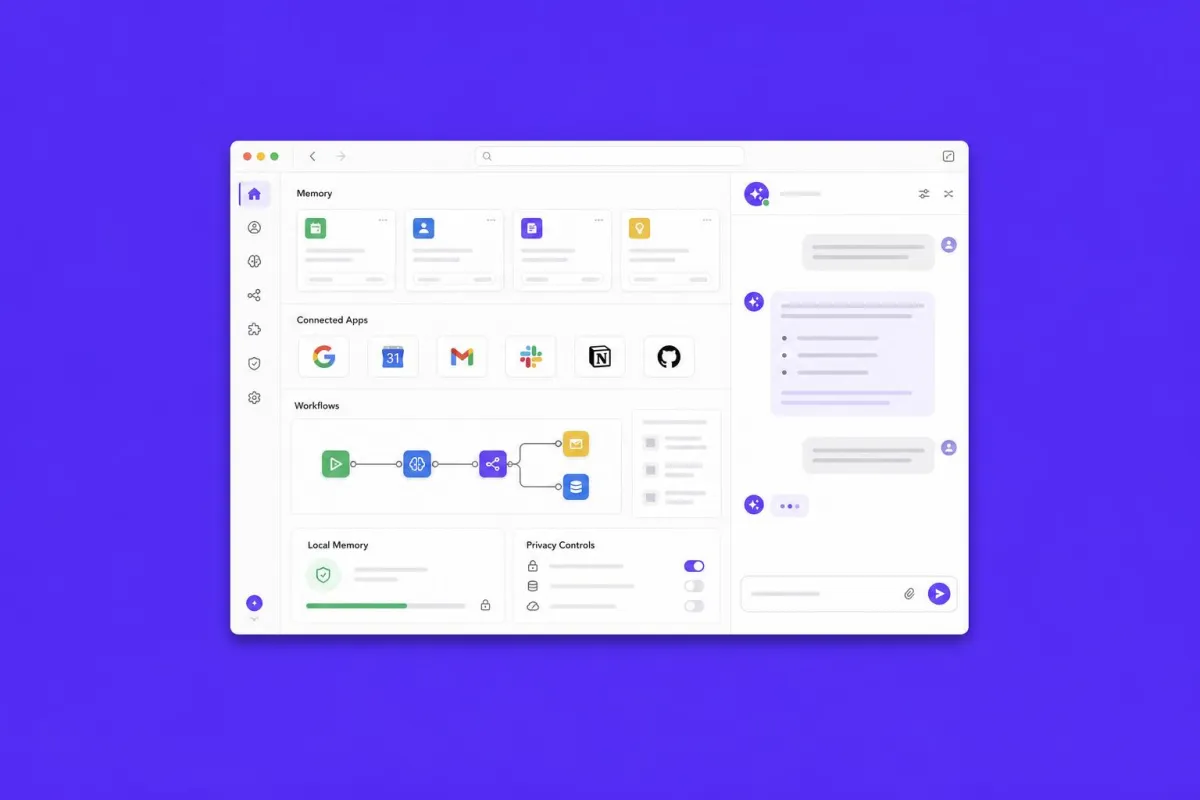
The reason is simple: OpenHuman does not present itself as just another AI chat assistant, but as a personal agent designed to remember, connect to the services we use every day, and become a true operational layer above our digital lives. According to sources analyzing it, the project aims for local memory of up to 1 billion tokens, integration with 118 services via OAuth, and an architecture designed to reduce reliance on the 'volatile' memory typical of cloud sessions.
This promise is significant because it touches on the most evident limitation of the first generation of agents: continuity. Many AI tools managed to be brilliant at single tasks but struggled to maintain context, preferences, operational history, and a true sense of persistence. OpenHuman tries to fill this exact gap, shifting the focus from simply 'responding well' to 'truly knowing the user over time'.
The strength of the project, at least on paper, lies in the mix of privacy, memory, and operability. OpenHuman is described as an open-source desktop agent released on May 13, 2026, with very rapid development and almost daily updates throughout the month. This pace matters because it signals two things: on one hand, a community that is moving fast, and on the other, a product that is still defining its shape while growing right before everyone's eyes.
But the most interesting point is not just technical. It is strategic. Until yesterday, the personal agent market seemed divided between very powerful but often unstable tools, and more polished solutions that were less 'alive' in terms of personalization. Several recent comparisons describe OpenClaw as extremely flexible but burdened by a certain maintenance tax, while Hermes is often described as more reliable in concrete operations. OpenHuman enters exactly this space, seeking to combine ease of onboarding, persistent personal memory, and a less intimidating user experience for those who don't want to spend half their time fixing the agent instead of using it.
However, this doesn't mean it has already won. Some video tests published in mid-May show that OpenHuman is impressive for its simplicity, quick setup, and user-friendly approach, but it can still struggle with long or more complex tasks, where agents like Hermes seem to maintain an operational advantage. This is an important detail because it reflects the historical moment of this category: the winner isn't the product with the best demo, but the one that manages to best balance autonomy, stability, and cognitive cost for the user.
In this sense, OpenHuman is also interesting as a market signal. Its initial success, with thousands of GitHub stars accumulated very quickly and strong community attention, shows that the demand for a true 'personal agent' is no longer theoretical. Users aren't just looking for copilots to write text or code: they are looking for systems that can interact with emails, documents, calendars, work tools, and personal memory in a continuous and reliable way.
And this is exactly where the real challenge lies. Building a personal agent doesn't just mean connecting some APIs or adding a chat window on top of Gmail. It means creating a system capable of understanding priorities, remembering habits, acting on real tools, and doing so without becoming fragile, invasive, or unmanageable. OpenHuman is attracting attention because it seems to have understood this direction well, even if it is too early to say if it will truly manage to overtake more mature competitors.
For founders, creators, and teams watching this evolution, the message is clear: the next agent war will not be played out solely on model quality, but on the ability to become a persistent personal infrastructure. The winner won't be the AI that speaks best, but the one that manages to fit best into people's digital lives. OpenHuman, today, is one of the most interesting names to watch precisely because it is trying to turn this idea into a real product.
Davide Stigliani
Full-stack developer and AI agent specialist — Tolve (PZ), Basilicata, Italy
I build AI agents, n8n automations and full-stack web applications for SMBs, connecting them to the ERP, CRM and channels the company already uses. I work across Italy and abroad, on site in Potenza and its province.
Related services
See all services →Related articles
How much does an AI agent cost a company in 2026: real prices, cost breakdown and how to compute ROI

Paperclip: the open source framework that lets you build a company of autonomous AI agents, with 74,000 stars on GitHub