Isomorphic Labs raises 2.1 billion: drug discovery AI enters its most ambitious phase
For years, artificial intelligence applied to medicine seemed like a massive promise, yet one still confined to research, prototypes, and visionary announcements. Today, something is truly changing: Isomorphic Labs, a drug discovery company supported by Alphabet and led by Demis Hassabis, has raised 2.1 billion dollars to scale its AI-based pharmaceutical design engine.
The figure is significant not only for the size of the round but for what it signals to the market. When an amount of this level is allocated to a startup founded in 2021 as a DeepMind spin-off, the message is clear: AI drug discovery is no longer a side experiment, but one of the areas where a serious portion of global capital is being concentrated.
Leading the round is once again Thrive Capital, along with existing investors like Alphabet and GV, and new names such as MGX, Temasek, and CapitalG. This expansion of the financial base suggests that the project is viewed not just as a technological gamble, but as a platform with long-term industrial and strategic potential.
What they are actually building
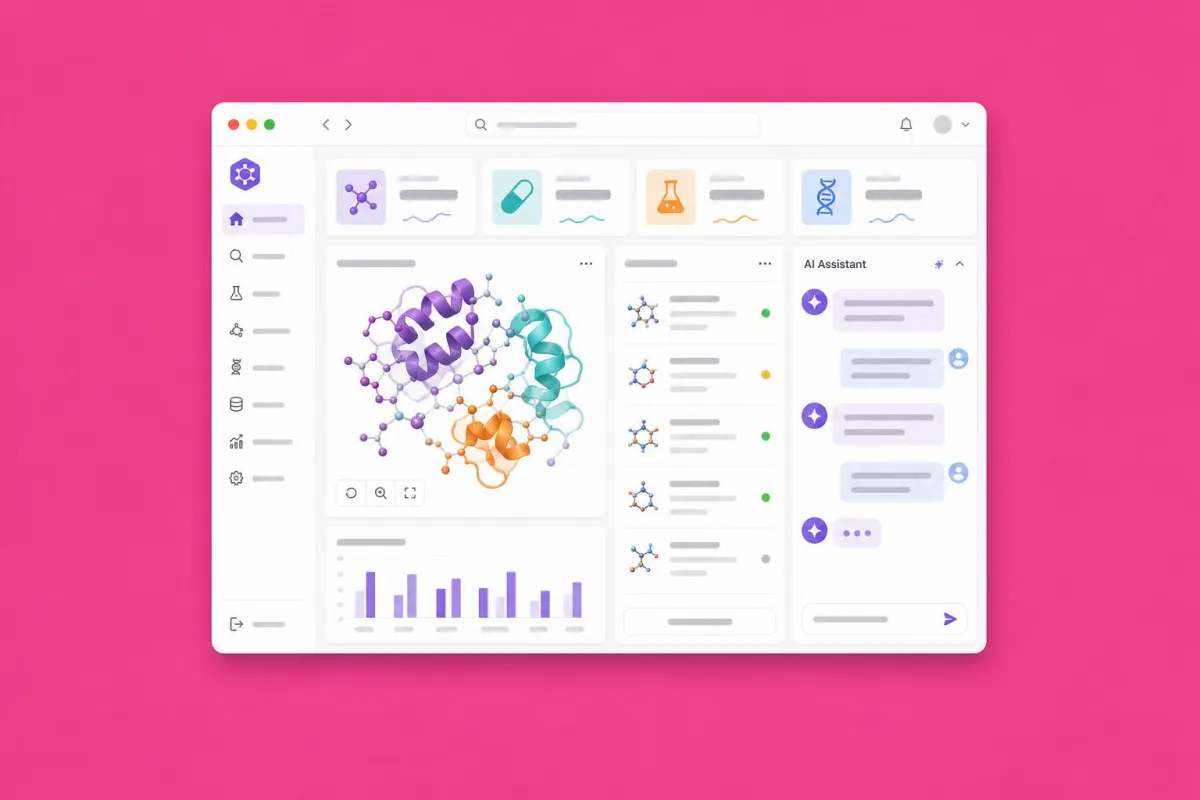
The core of Isomorphic Labs' thesis isn't simply "using AI in healthcare." The stated goal is to build a true drug design engine, called IsoDDE, capable of accelerating the engineering of molecules and pushing therapeutic programs more rapidly toward the clinic.
This is where the scientific legacy of DeepMind comes into play. Isomorphic was born in the wake of AlphaFold—the system that changed computational biology by predicting protein structures—and is now attempting to transform that scientific foundation into a broader machine for drug design.
The difference compared to the generic narrative about AI is substantial. It's not just about analyzing data faster, but about compressing time and costs in the slowest and most uncertain phase of pharmaceutical research: understanding which molecules actually have the potential to become effective therapies.
Why this round carries so much weight
In traditional pharmaceuticals, the real bottleneck isn't a lack of ideas, but the difficulty of transforming them into actual candidates with a reasonable probability of success. If AI can even slightly improve the quality of initial hypotheses and reduce the number of wasted attempts, the economic and clinical impact can be enormous.
This is precisely why the Isomorphic Labs round has a meaning that goes beyond a single company. It marks the transition from a fascinating narrative to a phase where investors want to see platforms, pipelines, partnerships, and first clinical entries—concrete signs that AI can become infrastructure for the biotech sector and not just a research aid.
The timing also reinforces this interpretation. After raising 600 million in the previous round, the company has now brought its total external capital to approximately 2.6 billion dollars, a scale that positions it among the most relevant names in global AI drug discovery.
Ambition and its limits
In the post shared, the idea of "solving every disease" appears—a powerful formula that works well narratively but should be read as a long-term vision, not an immediate promise. Available sources speak of expanding the design engine, accelerating the internal pipeline, and bringing more therapeutic programs to clinical trials, rather than a universal solution already on the horizon.
This doesn't make the project any less important; quite the opposite. It simply means placing it back into its real dimension: one of the most serious bets on the fact that AI can change the way drugs are discovered and developed, yet still within a chain where biological validation, experimentation, and regulatory timelines remain decisive.
The first clinical tests on humans are indicated for the end of 2026 in several reports, a sign that the company is trying to transform its computational power into measurable therapeutic results.
Why it matters even outside of biotech
This story interests not only those working in pharma, but anyone observing the evolution of AI as economic infrastructure. When a company born from the DeepMind ecosystem raises billions not to make a chatbot or a productivity tool, but to build a scientific discovery machine, it means the market is increasingly rewarding high-impact vertical applications.
For founders, investors, and tech teams, the signal is clear: the next wave of artificial intelligence won't just consist of better interfaces, but of systems capable of intervening in the most expensive and complex real-world processes. Isomorphic Labs is important for this very reason: not because it promises miracles, but because it attempts to move AI from the level of conversation to the level of discovery.
Davide Stigliani
Full-stack developer and AI agent specialist — Tolve (PZ), Basilicata, Italy
I build AI agents, n8n automations and full-stack web applications for SMBs, connecting them to the ERP, CRM and channels the company already uses. I work across Italy and abroad, on site in Potenza and its province.