Dreaming: LLMs 'dreaming' up solutions while idle
One of the most fascinating innovations to emerge in recent months is the 'Dreaming' function, introduced experimentally by several laboratories (DeepMind, Anthropic, and Mistral with slightly different approaches) and which is redefining what 'autonomous agent' means.
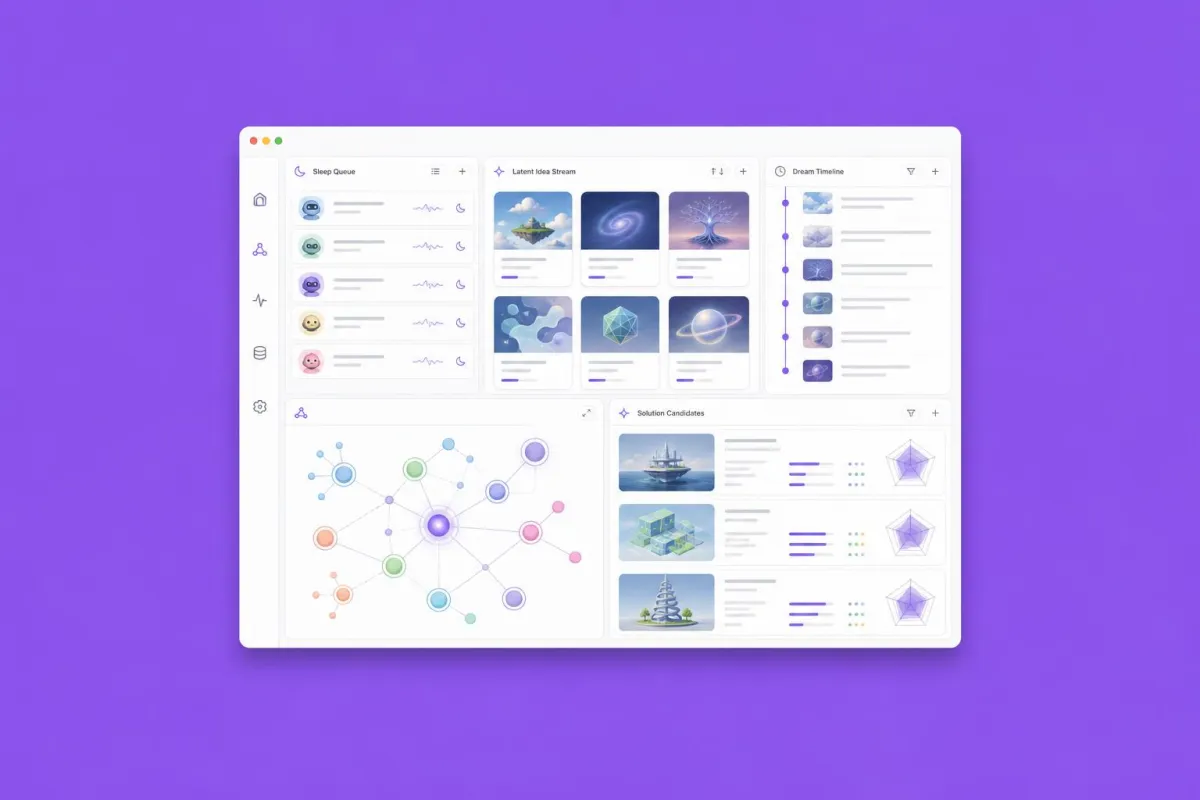
The idea is simple: instead of remaining passive between tasks, agents use idle cycles to simulate scenarios, explore alternative branches of their reasoning, and consolidate long-term memory — exactly as the human brain does during REM sleep.
In practice, during a Dreaming session, the agent reviews the latest interactions, identifies sub-optimal decisions, and generates 'counterfactuals': what would have happened if I had chosen a different tool call? The output is saved in an episodic memory and used to improve future decisions.
Early internal benchmarks show improvements of 18-25% on long multi-step tasks (over 50 steps), with a significant reduction in loops and recursive errors. For those building customer ops or algorithmic trading agents, it is a breakthrough.
The downside is consumption: an agent that 'dreams' costs more. But with the pricing of new batch tiers (see Claude × SpaceX), the marginal cost is sustainable for most enterprise use cases.
Davide Stigliani
Full-stack developer and AI agent specialist — Tolve (PZ), Basilicata, Italy
I build AI agents, n8n automations and full-stack web applications for SMBs, connecting them to the ERP, CRM and channels the company already uses. I work across Italy and abroad, on site in Potenza and its province.
Related services
See all services →Related articles

How much does an AI agent cost a company in 2026: real prices, cost breakdown and how to compute ROI

Paperclip: the open source framework that lets you build a company of autonomous AI agents, with 74,000 stars on GitHub