Claude Code + Blender MCP: 3D environments without Blender
Blender is one of the most powerful tools available for 3D creation, and it's free. Historically, it is also one of the tools with the steepest learning curves in the creative software landscape. Dozens of shortcuts, an interface dense with options, and a mental model completely different from any other visual tool.
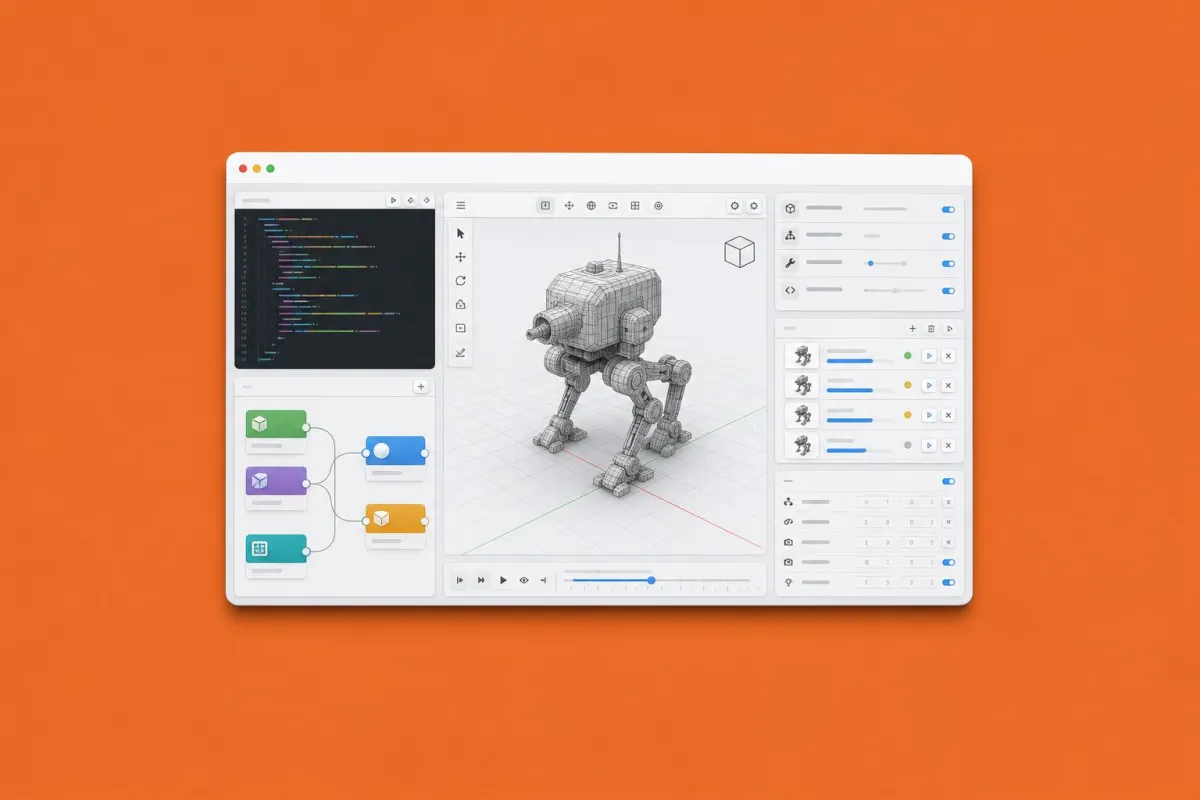
The integration between Claude Code and Blender via MCP (Model Context Protocol) breaks down this barrier radically. It's not about simplifying the interface: it's about eliminating it as the primary entry point. The workflow becomes textual and conversational: you describe the environment you want to create, Claude translates the instructions into Python scripts that Blender executes, and the 3D environment takes shape.
The implications for those working in gaming, architecture, product design, e-commerce, and video content production are concrete. Prototyping a game environment, visualizing an architectural space, creating 3D assets for an online store, or generating sets for AI videos — all of this becomes accessible to professionals who have never opened Blender.
The current limit is that output quality depends on the precision of the text descriptions, and there are artistic tasks — complex materials, elaborate animations, advanced lighting — where the expert hand of a 3D artist remains irreplaceable. But for rapid prototyping and generating functional environments, this workflow is a true paradigm shift.
Davide Stigliani
Full-stack developer and AI agent specialist — Tolve (PZ), Basilicata, Italy
I build AI agents, n8n automations and full-stack web applications for SMBs, connecting them to the ERP, CRM and channels the company already uses. I work across Italy and abroad, on site in Potenza and its province.